
Control the conversion points that create evidence.
Phase 0–0.75 covers the first two years. Livestock activity is limited to Rakai / Kacheera while the larger land lease, feed-production technology and construction process are secured.
The existing approximately nine-acre Kigumba / Kiryandongo core target includes the 7.5-acre biological zone for an approximately two-acre corn / maize pilot and the one-acre dirty-industrial zone for an interim biofarm / feed-processing footprint. The on-farm bio lab fits inside the farm boundary. These are plans, not proof of tenure or operation.
Gulu is outside Phase 1. Coffee is a supported catalogue option whose rollout remains off until its phase, location, growing plan and workflow are defined.
Regional procurement
Quality-controlled processing
Animal nutrition
Measured livestock conversion
Verified markets
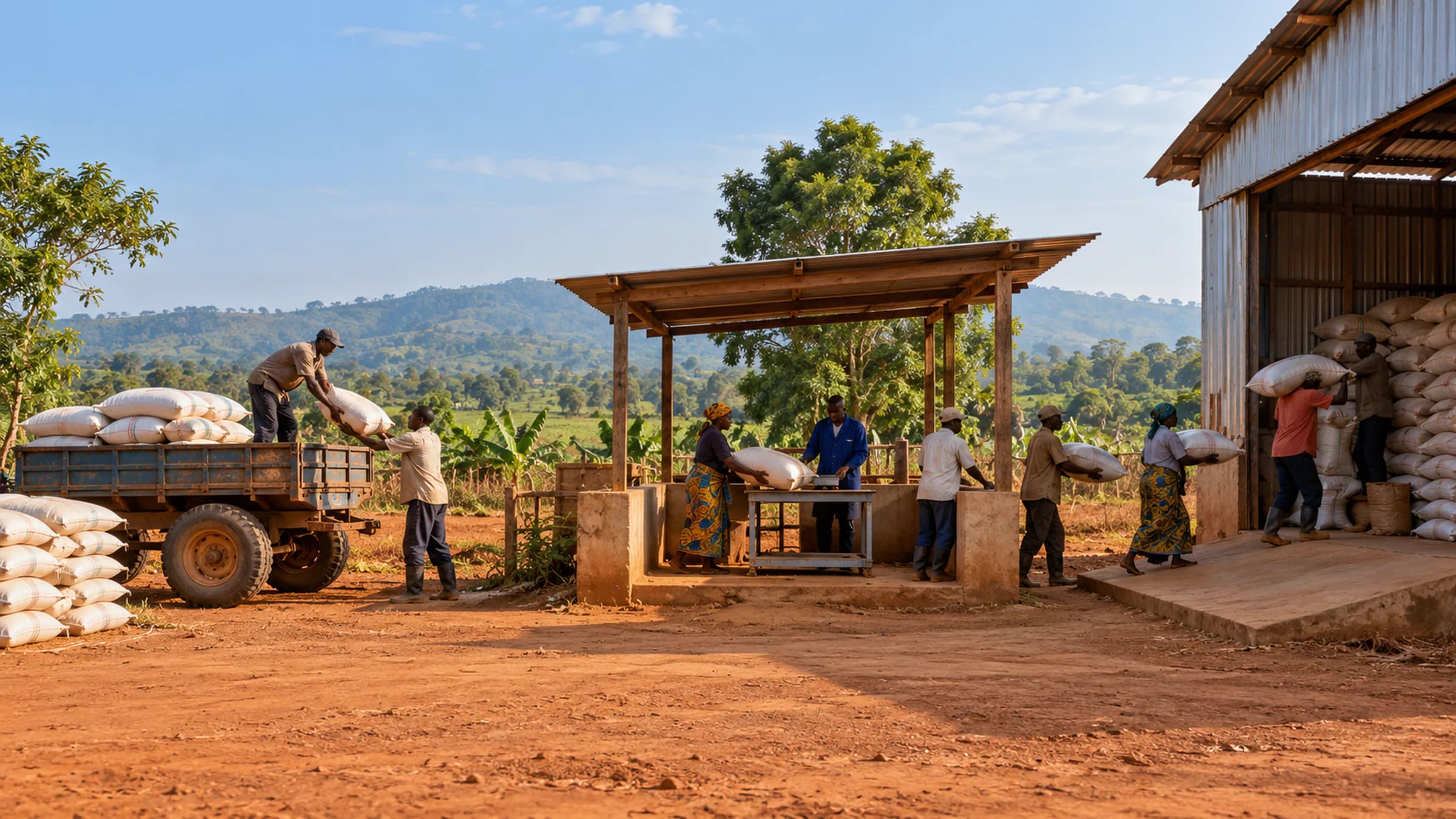
From intake to dispatch
A quantity is traceable because each step is its own record, not a column on a balance.
- GrainReceiptSupplier, vehicle, gross and tare at intake
- InventoryMovementStock changes as movements, never as an edited balance
- InventoryReconciliationMovement totals compared and any difference recorded
Where the measurement sits
- A grain receipt, a mill batch and an inventory movement are separate records, so a quantity can be traced from intake to dispatch.
- Stock is held as movements and reconciliations rather than as one editable balance figure.
- A rejected intake posts no stock movement, so a refused load cannot quietly appear in later totals.
What this page does not claim
- The integration points describe where measurement happens. They are not a statement that a completed integration exists.
- A movement ledger is not an audit of the weighbridge itself. The record is evidence of what was entered, not of what was weighed.