Preview ahead of launch. This is a preview of Tibekinga Holdings before it starts trading. Operations are being set up, and the figures and plans shown are planning material, not operating results.
Circular agriculture

By-products are planned to stay in the system, and to be measured.

The loops below are Planned. They are designed as measured experiments, not marketed as free energy, guaranteed savings or carbon revenue.

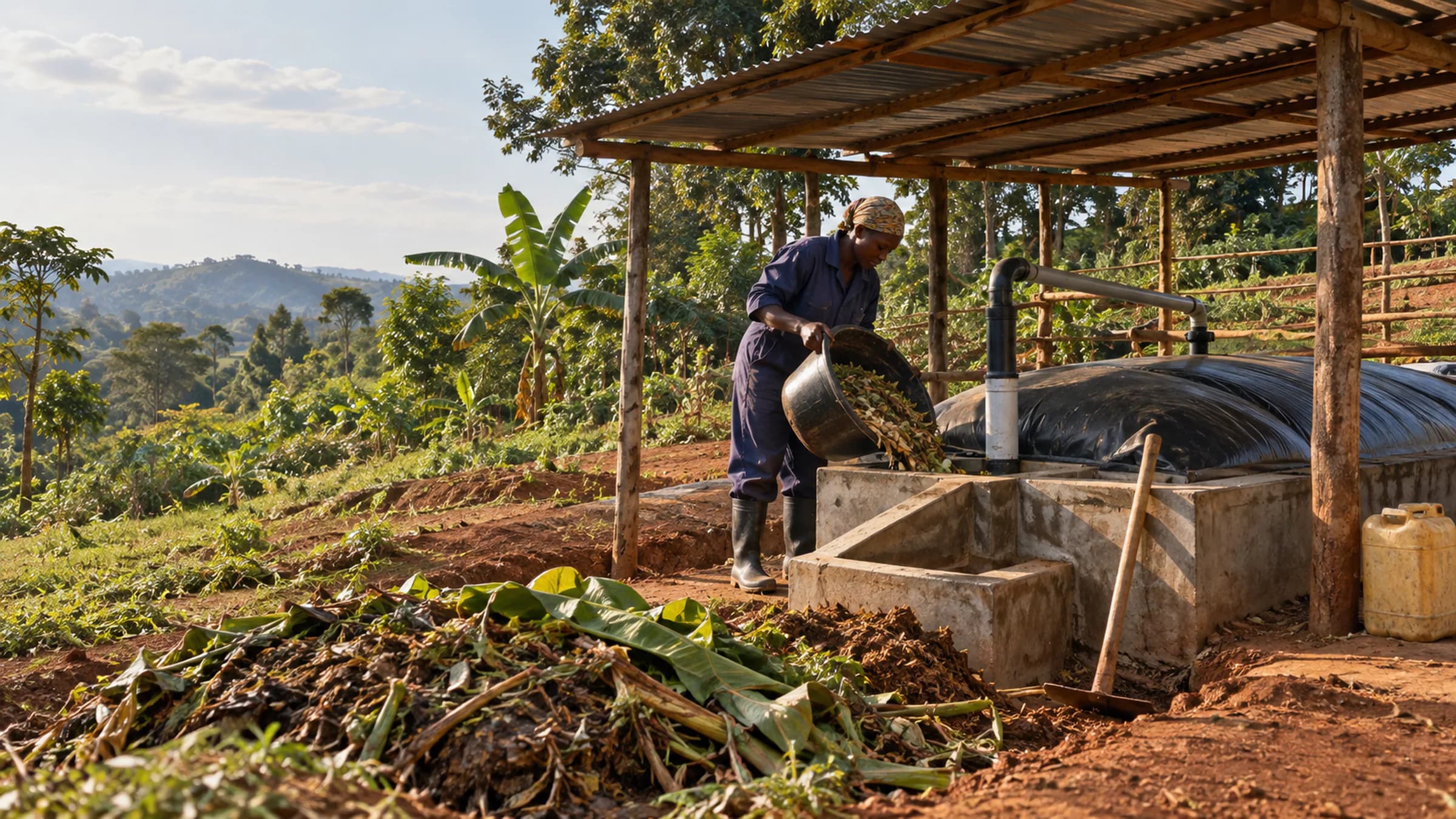
Illustrative measured resource-recovery setting with a modest experimental digester, compost material and practical farm infrastructure.
Experimental context · inputs, outputs and economics require measurement

Planned loops

A loop appears here only while the options it depends on are public.

Planned

Bran into rations

Maize bran from milling is planned as a ration input first. Only a recorded surplus is sold.

Planned

Manure into compost

Manure from the Rakai / Kacheera cattle activity is planned to be composted, with its inputs and outputs measured, and returned to cropland.

Record trail

How a by-product is accounted for

Each loop is a measured record. None of it is a claimed saving.

  1. MillBatchMilling produces flour and bran
  2. BranDecisionBran kept for rations or released as surplus
  3. FeedIssueFeed issued from a recorded lot
  4. CompostBatchManure and residues measured into compost
On the record

What each loop records

  • A bran decision records the quantity, the route it takes and the evidence for that route.
  • Feed issued is recorded from a named feed lot to a named recipient, so a ration can be traced.
  • A compost batch records its inputs and its outputs, so recovery is measured rather than assumed.
Not claimed

What this page does not claim

  • No carbon credit, energy saving or recovery result is claimed.
  • The mill is not designed to run on biogas.