
Agro-processing
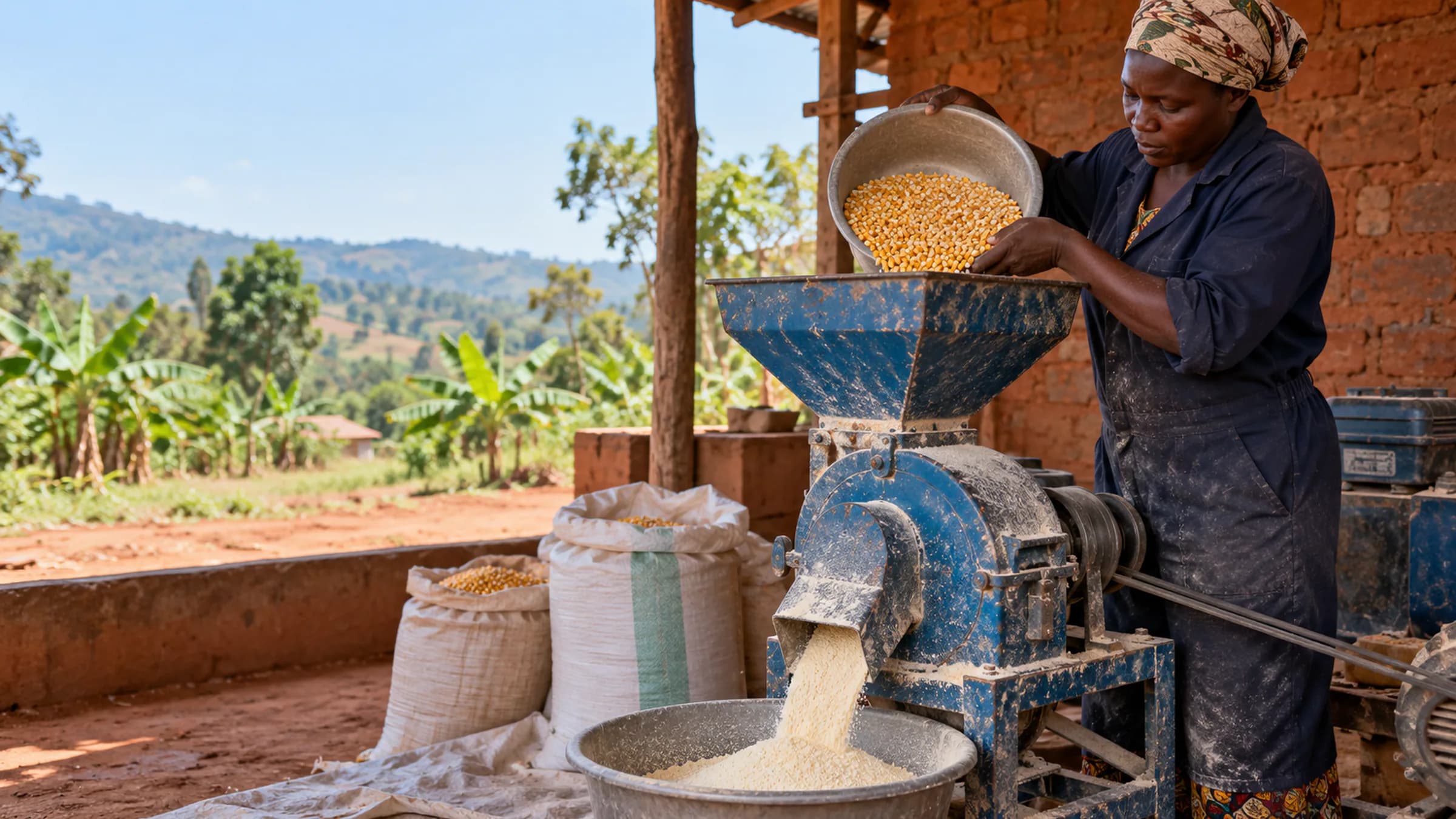
Human-food maize milling is a principal Phase 1 cash engine.
The digital operating model supports receiving, quality checks, weighing, lot creation, production batches and mass-balance reconciliation.
Commercial modes remain explicit: toll milling and own-account milling.
Record trail
One batch, end to end
Output belongs to the batch that produced it, so a run can be examined rather than averaged away.
- MillBatchGrain in, moisture, operator, machine and output
- BranDecisionThe bran split, decided and recorded against the batch
- DispatchRecordWhat left, when, and against which order
On the record
What a mill batch records
- Each batch records grain input, moisture, operator and machine, with output attributed to the same batch.
- Reconciliation compares recorded movements rather than trusting a single stored figure.
- Lots and internal transfers keep grain attributable as it moves between locations.
Not claimed
What this page does not claim
- A recorded batch is not a guarantee of throughput, margin or reconciled yield.
- Validated capacity is not established. A batch record shows that a run happened, not that the run was efficient.